Guides
Unbrace vs Bend: an honest comparison
Bend is the most popular stretching app: fifteen million users, hundreds of illustrated routines, streaks and analytics. Unbrace is smaller and narrower on purpose: thirteen video resets for people who sit all day, a session that adapts to the room you are in, no account, no scoreboard. Here is how they differ, factually, as of September 2026.
What is Bend?
Bend, by Bowery Digital, describes itself as the simple, affordable way to make stretching and movement part of your daily routine, with over 15 million users. It offers hundreds of exercises and routines, illustrations and videos for all levels, streaks and analytics to track progress, and custom routines built from its library. On the US App Store it is rated 4.8 out of 5 on 173,000 ratings, is available in sixteen languages, and lists monthly memberships from $4.99 to $13.99 and annual memberships from $19.99 to $39.99.
What is Unbrace?
Unbrace is an iPhone app of short guided mobility resets, three to ten minutes, for people who sit all day: neck, shoulders and back, at your desk, on a call or at home. Thirteen resets, forty-two movements each demonstrated in video by the same instructor, a voice that guides in English or French or a silent mode, no account, and a history that stays on your phone. One routine a day is free, the day’s reset or any other; Unbrace+ unlocks the whole library for 9.99 € a month or 44.99 € a year, launch prices. It is in pre-release as this guide is written.
Where Bend is the better choice
If you want breadth, Bend has it, and it has had years to earn its ratings.
- A far larger library, with routines for many goals beyond a screen day.
- Streaks, analytics and custom routines, if tracking motivates you.
- Sixteen languages and a long track record on the App Store.
- Lower entry prices on some membership tiers.
Where Unbrace is the better choice
If you want the smallest thing that fits between two calls, that is the whole point of Unbrace.
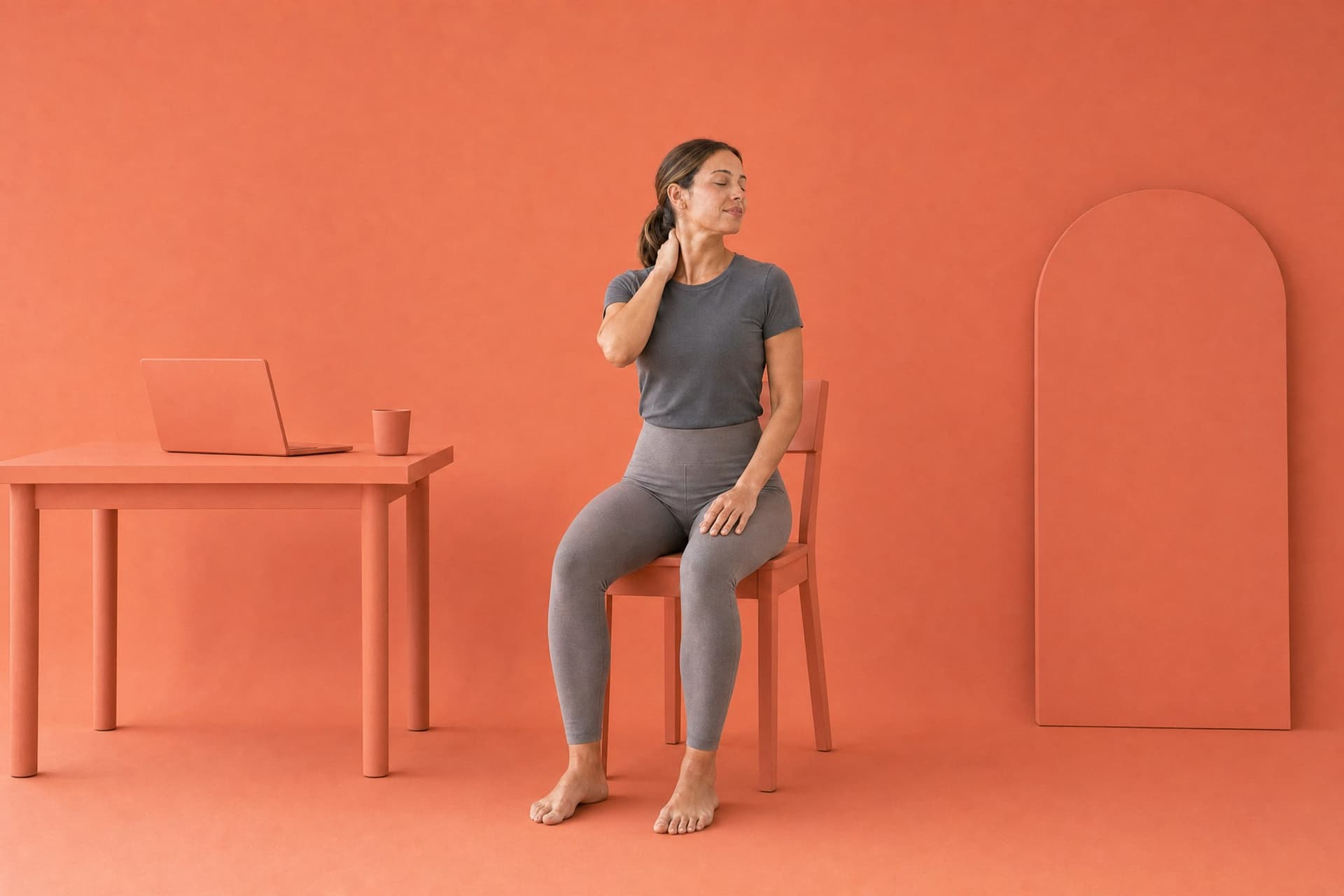
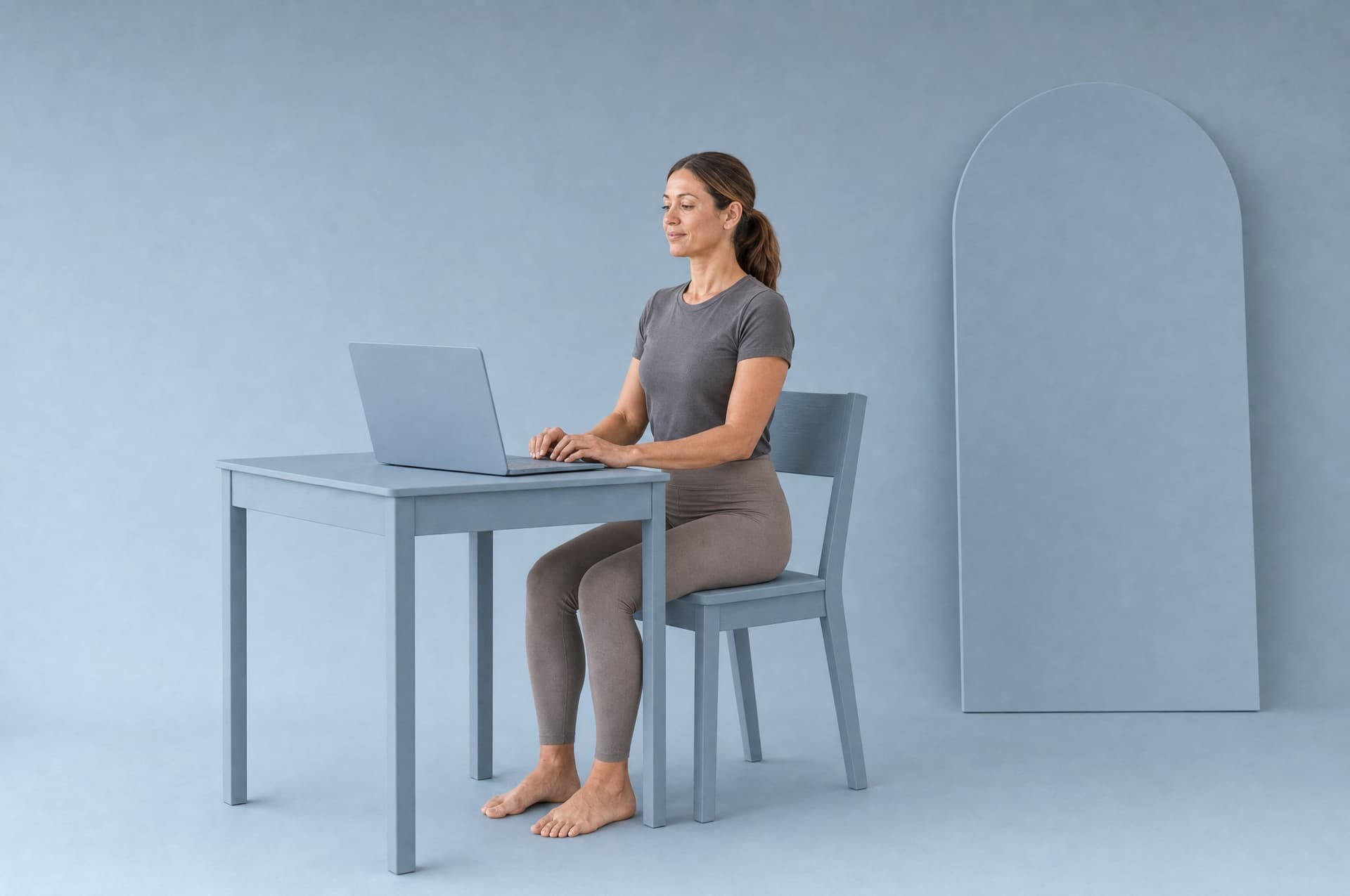
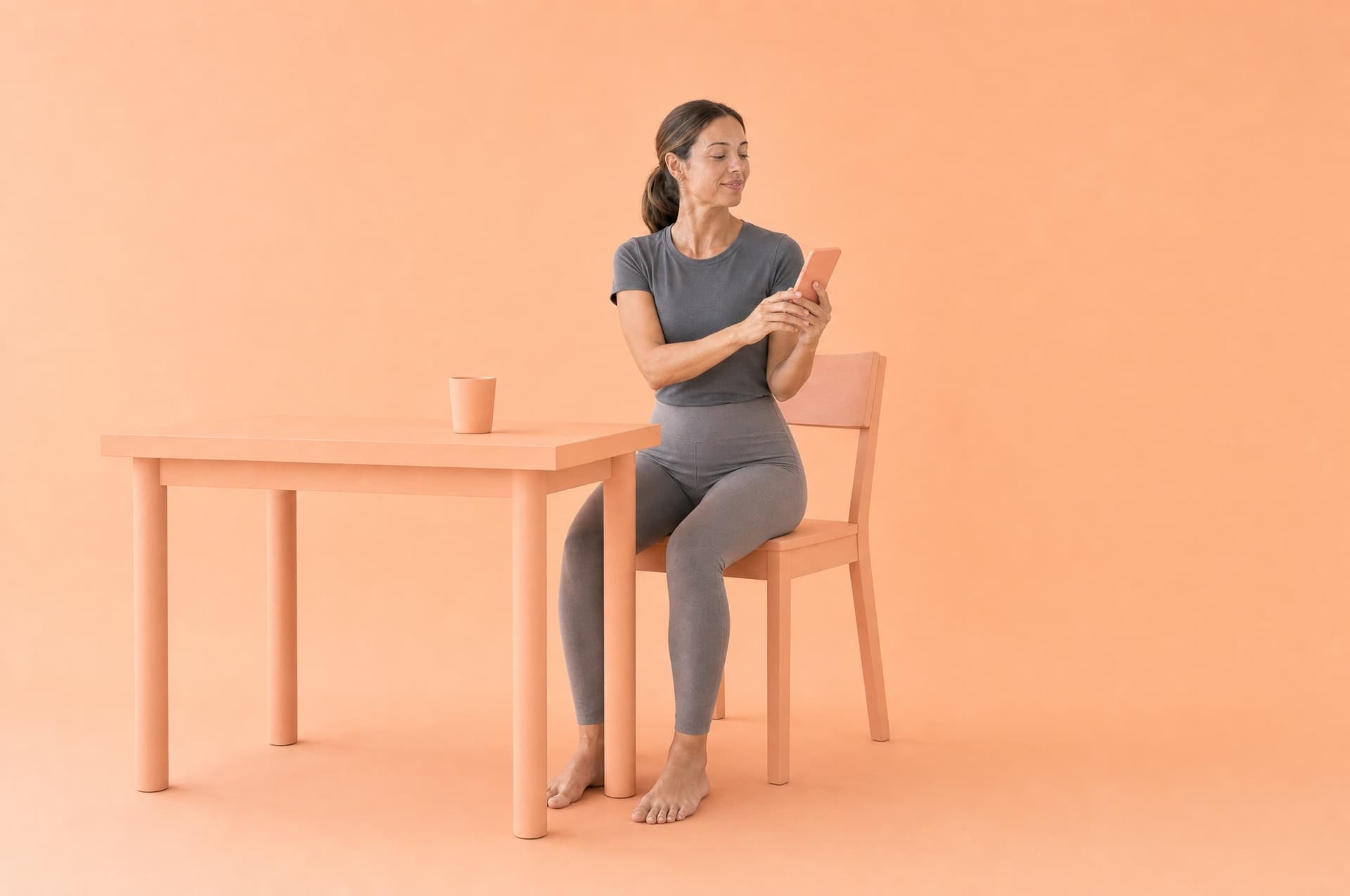
- A session that adapts to the room: at your desk, on a call, at home, with only the movements that place allows.
- Every movement demonstrated in video by one instructor, not illustrations.
- No account, no streak pressure, nothing to maintain; the daily reset stays free.
- A French voice as well as an English one, and a catalogue built around the neck, shoulders and back of people who sit.
Side by side
Facts from both App Store listings and websites, September 2026. Prices change; the store pages are the reference.
- Made for: Bend, daily stretching and flexibility for everyone. Unbrace, mobility resets for people who sit all day.
- Library: Bend, hundreds of exercises and routines. Unbrace, 13 resets and 42 movements.
- Format: Bend, illustrations and videos. Unbrace, video of one instructor, with a voice or in silence.
- Fits the room you are in: Bend, no. Unbrace, yes, six places.
- Account: Bend, membership through the app. Unbrace, none; subscription through your Apple account.
- Progress: Bend, streaks and analytics. Unbrace, one count of resets, no streak pressure.
- Languages: Bend, sixteen. Unbrace, English and French, voice included.
- Price: Bend, $4.99 to $13.99 a month or $19.99 to $39.99 a year. Unbrace, daily reset free, 9.99 € a month or 44.99 € a year.
- Platform: Bend, iOS and Android. Unbrace, iPhone, pre-release.
Which one should you pick?
Pick Bend if you want a large, flexible stretching library and you enjoy tracking your progress. Pick Unbrace if your problem is specifically a screen day, you want something that fits a call or a desk, and you would rather not manage another account. Many people will be well served by either; the honest difference is scope, not quality. Bend is a trademark of its owner; Unbrace is not affiliated with it.