Guides
Neck and shoulders after a screen day
After a day at a screen, the neck and shoulders are usually the first to complain. Five gentle movements, done slowly for three to five minutes while you are still seated, are enough to give them a break: slow breaths, chin nods, neck side tilts, shoulder rolls and a seated twist. No equipment, and nothing that hurts.
Why does the neck tighten after a screen day?
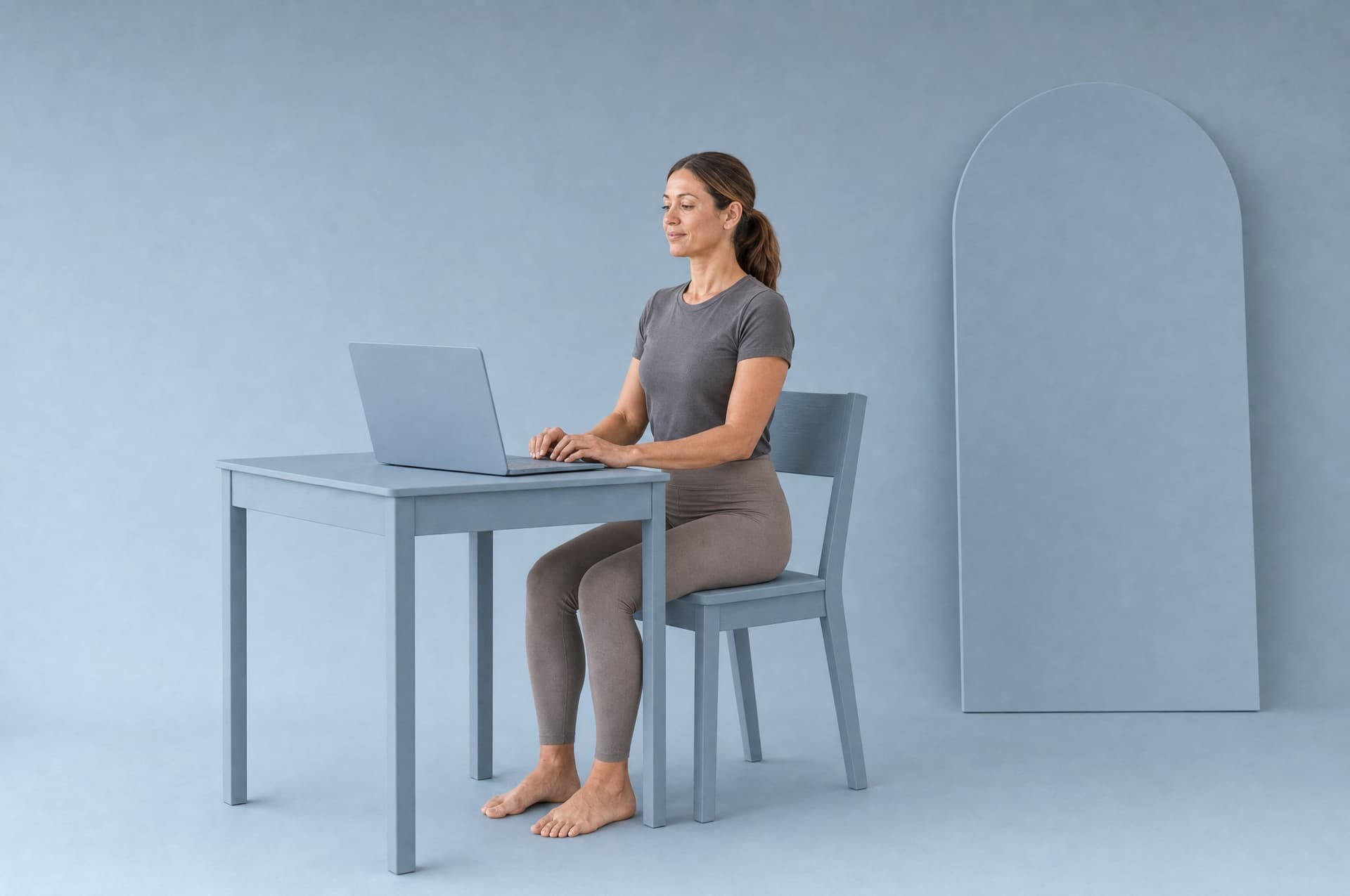
Not because of anything dramatic. A screen keeps the head slightly forward and the shoulders slightly lifted, and it keeps them there for hours. Muscles held still in one position for that long tend to feel stiff, whatever the chair. The World Health Organization puts it simply: any amount of physical activity is better than none, and every age group should limit the time spent sedentary.
The fix is the mirror image of the problem: a few minutes of slow, comfortable movement, ideally before the stiffness settles for the evening.
The five movements
Stay seated, feet flat on the floor. Each movement takes thirty to forty-five seconds. Move slowly and stay well inside a comfortable range; a light stretch is the goal, never a pull.
- Comfortable seated breathing: sit tall, let three or four slow breaths lengthen the exhale.
- Chin nods: small yes movements, chin gliding down and back, without forcing the head forward.
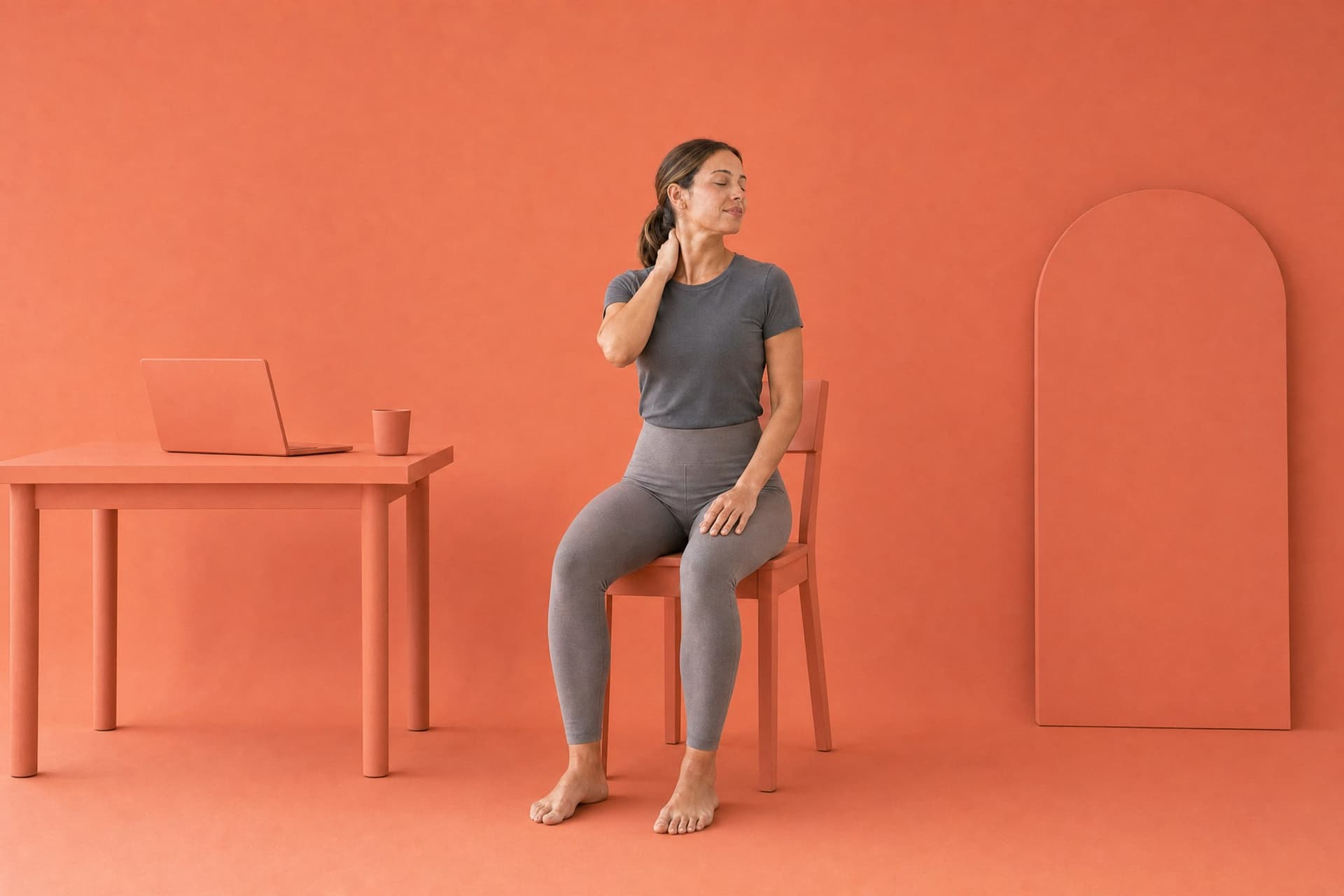
- Neck side tilts: ear toward the shoulder, the opposite arm hanging loose, then the other side.
- Shoulder rolls: up, back and down, slowly, letting the shoulder blades settle.
- Seated rotation: one hand on the opposite knee, turn the chest gently, look over the shoulder, then the other side.
How often is enough?
More often than once a week, less often than every hour. A meta-analysis of 22 studies found that micro-breaks of ten minutes or less have a small but real effect on vigour and fatigue. One short reset on a screen day is a realistic start; a second one after a long stretch of calls is a bonus, not a rule.
When should you stop?
At the first sharp or radiating pain, dizziness, weakness or numbness. Adapt or skip any movement freely: alternatives are part of the practice. If discomfort keeps coming back, talk to a health professional. This guide describes gentle mobility for people who sit a lot; it is not medical advice.
Sources
- Cagnie et al., Individual and work related risk factors for neck pain among office workers, European Spine Journal, 2007
- Albulescu et al., Give me a break! A systematic review and meta-analysis on the efficacy of micro-breaks, PLOS ONE, 2022
- World Health Organization, Physical activity fact sheet, 26 June 2024