Guides
Chair, standing or floor: which mobility break for which room?
The best mobility break is the one your room allows. Seated at a desk: neck, shoulders and upper back. Able to stand near a wall or a chair: hips, back and legs join in. With floor space: the whole body, lying down or on all fours. Choosing by room rather than by ambition is what makes the habit last.
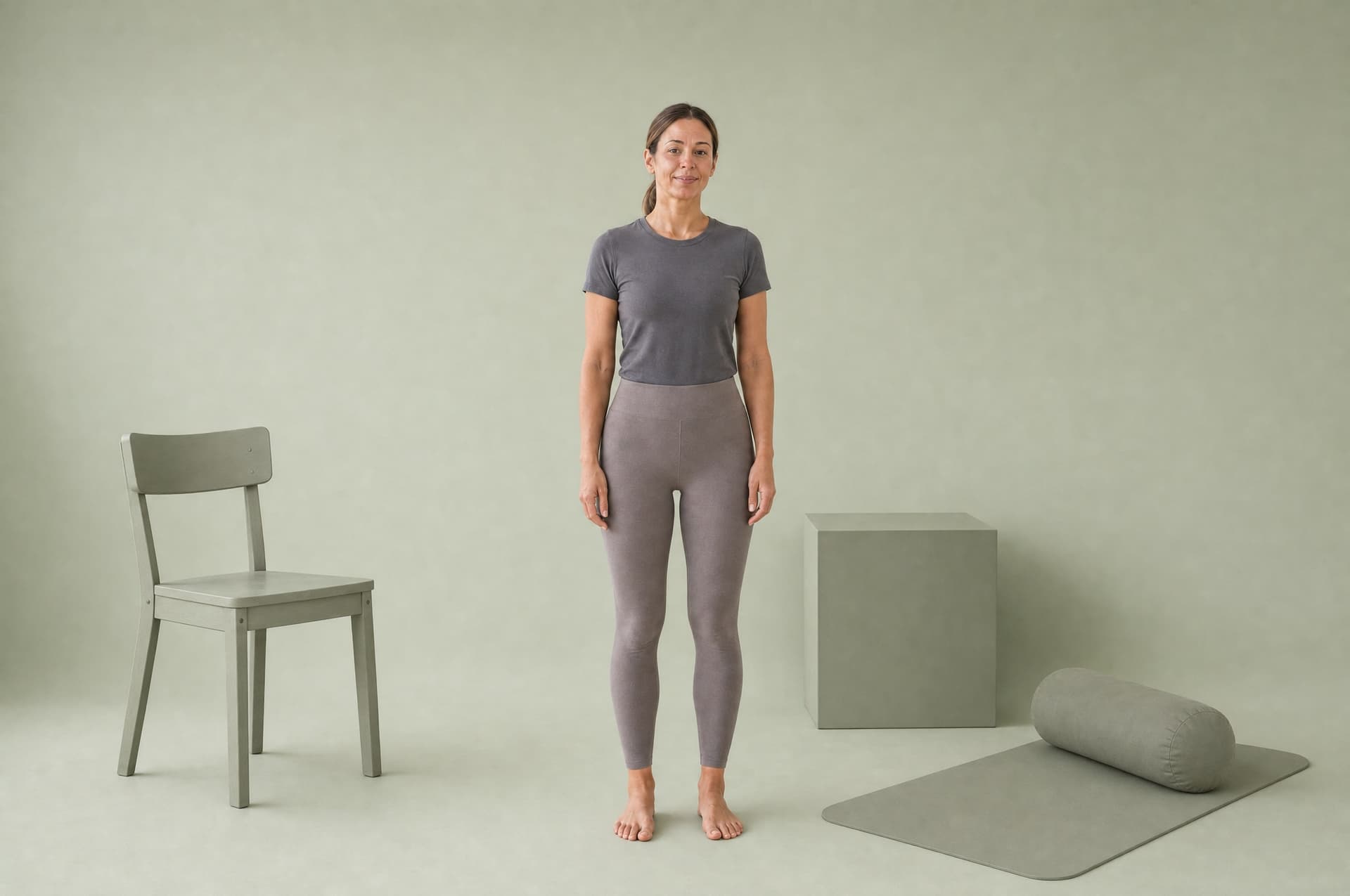
Without leaving your chair
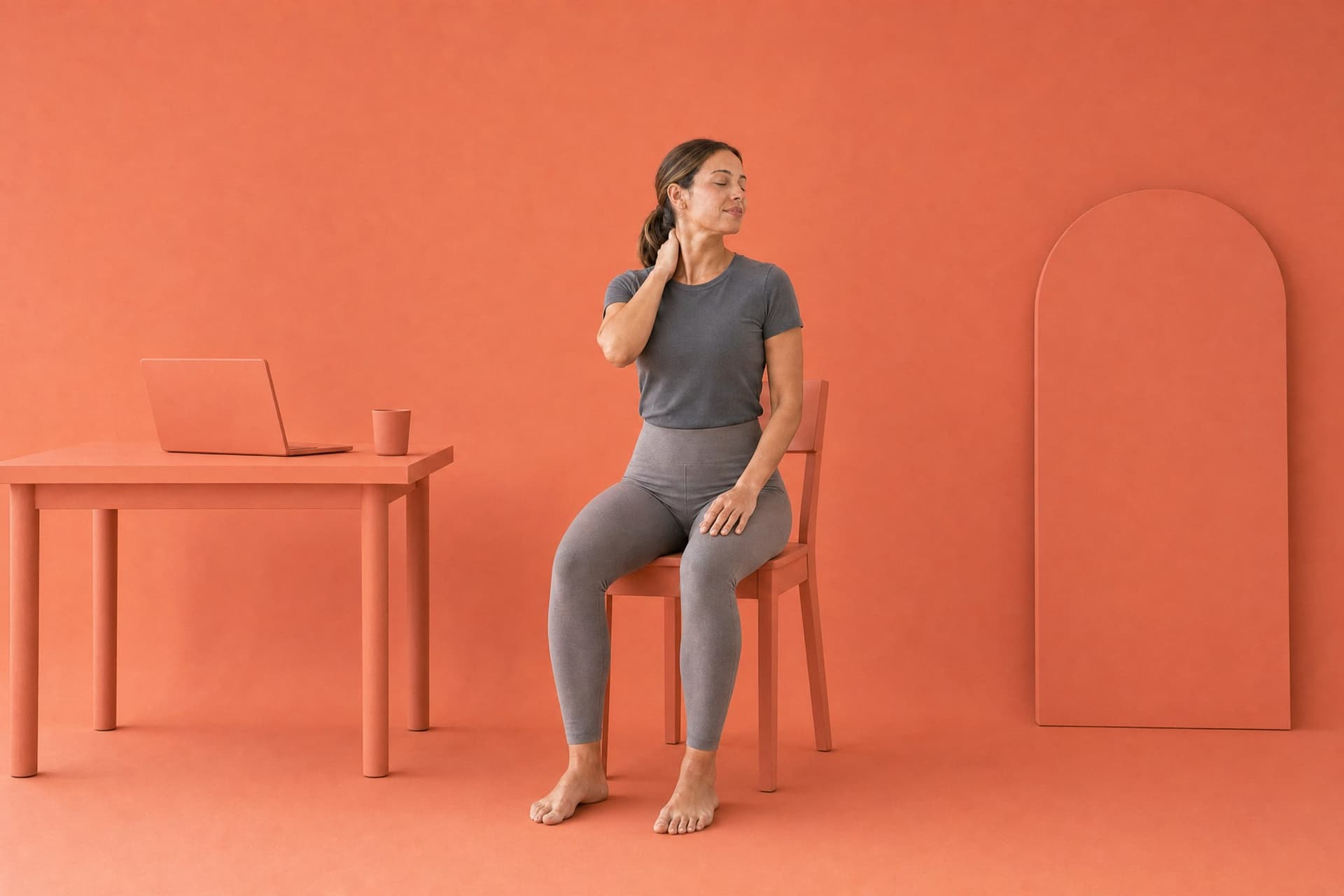
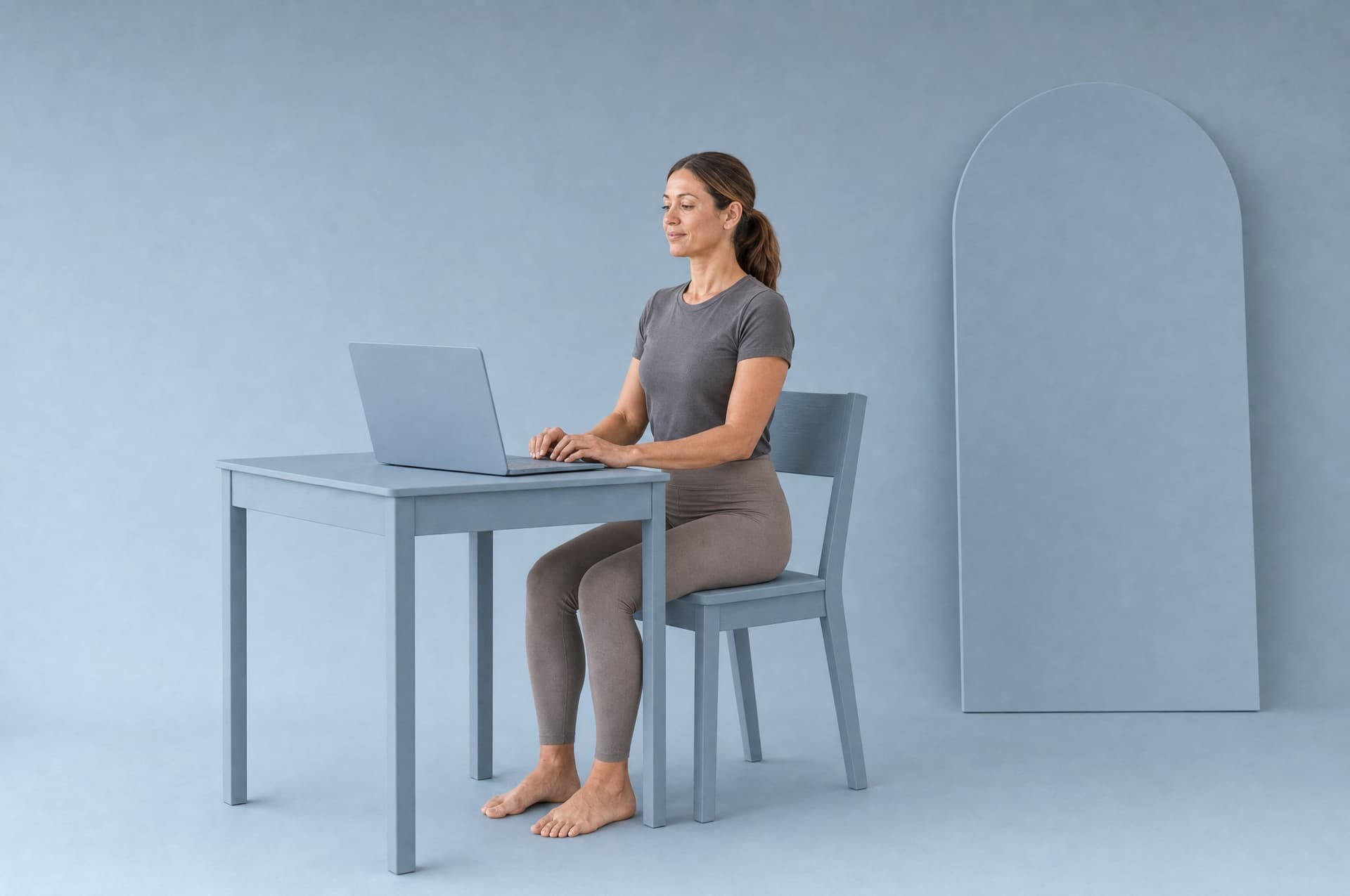
The seated position reaches the neck, the shoulders, the upper back and, with a hip hinge or a seated march, the hips and legs. It is silent, it fits any office, and three to ten minutes are enough. Its limit is amplitude: you will not open the front of the hips or lengthen the back the way standing or lying down does.
When you can get up
Standing near a wall or a chair adds the hips, the back of the legs and a fuller spine: side reaches, wall chest openings, a supported fold. No floor needed, no mat, and it takes the same three to seven minutes. It is the natural break between two meetings, or the first thing to do when the last call ends.
With room on the floor
Lying on your back or on all fours lets the whole body move without holding itself up: knee hugs, bridges, cat cow, side bends. A mat or a carpet is enough. This is where the lower back and the hips get the most room, and where three to ten minutes feel the longest, in a good way.
To close the day
The most useful sequence of all starts on the chair and ends on the floor: a few seated movements, a standing transition, then the floor. It marks the end of the working day in the body, not only on the calendar. Seven to ten minutes.
How do you choose in five seconds?
Look at the room, not at your motivation.
- Colleagues around, or a call in progress: chair.
- A wall or a chair to lean on, and a minute of privacy: standing.
- Floor space and nobody to step over you: floor.
- The last call of the day just ended: chair to floor.